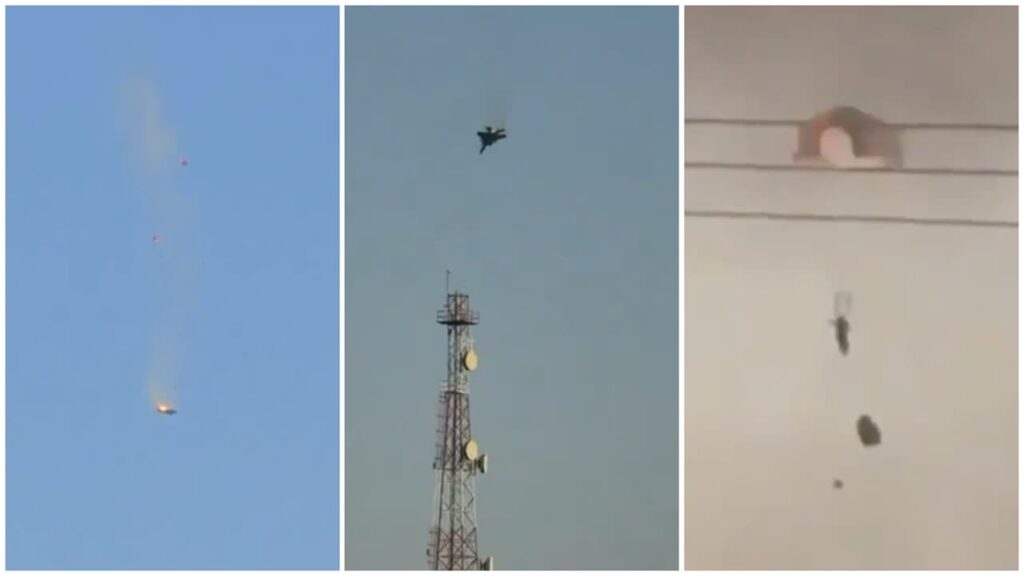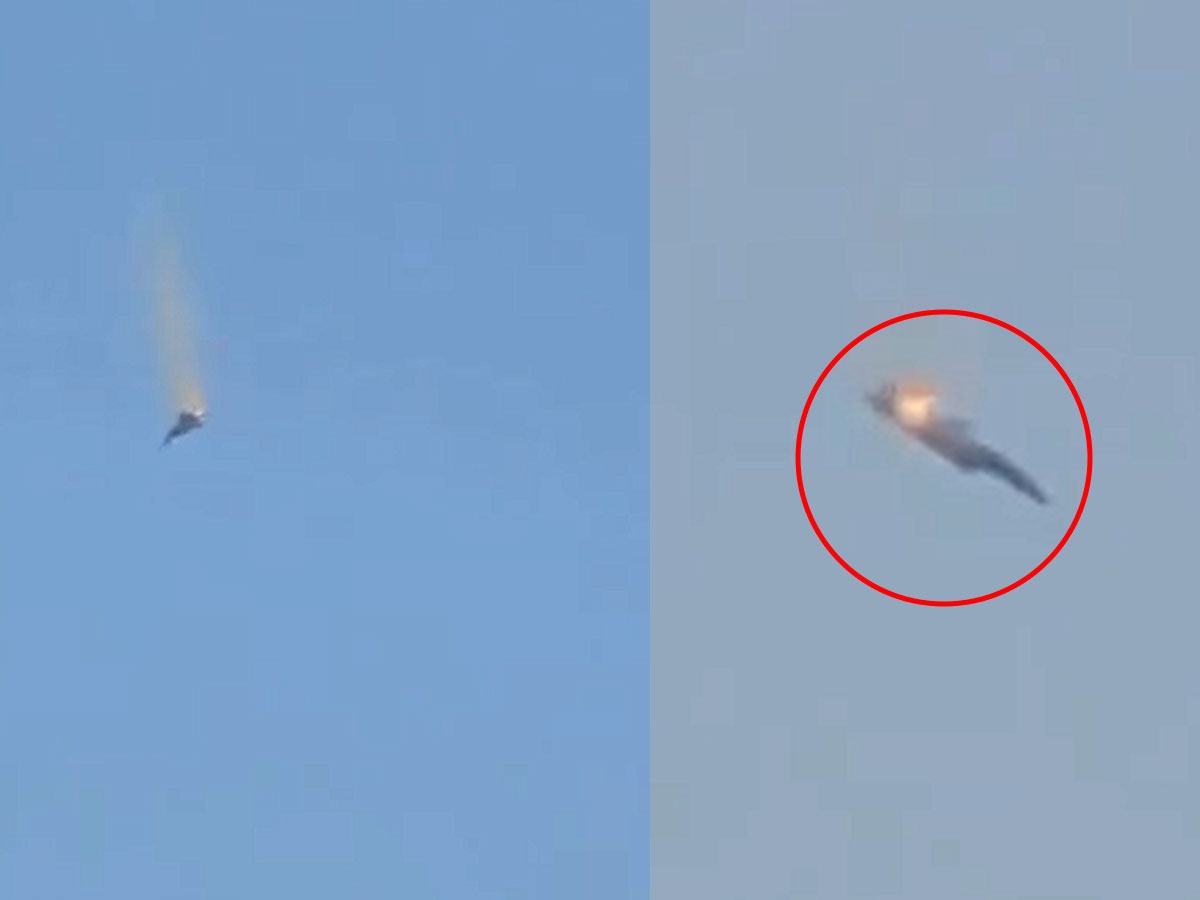
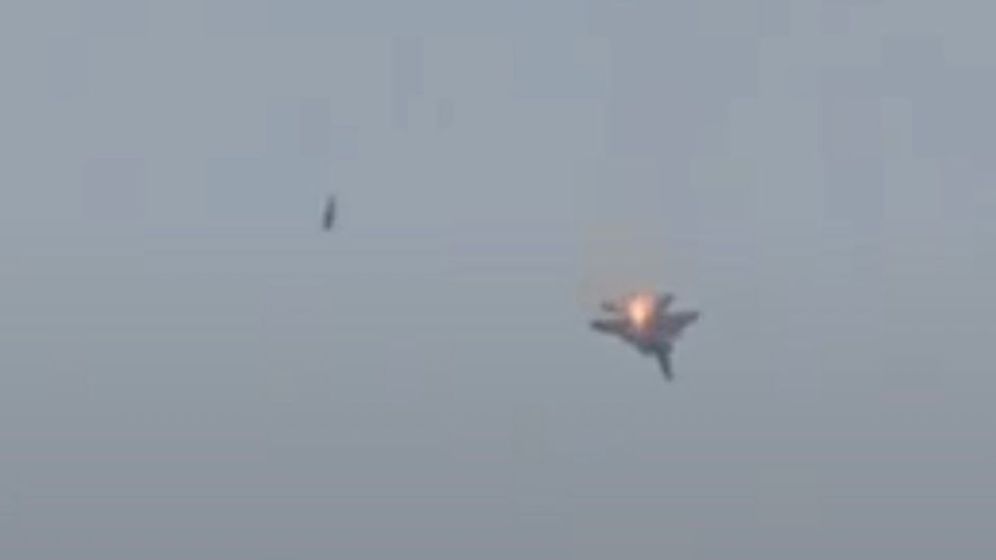
A United States Air Force F-15 fighter jet crashed west of Al Jahra, Kuwait, during morning hours after losing control in flight, with both pilots ejecting safely moments before impact, according to circulating video evidence and open-source geolocation analysis of the crash site.
Videos shared online and later geolocated by open-source analysts show the aircraft descending uncontrollably before striking the ground in a desert area west of Al Jahra. Footage appears to capture damage or disturbance near the aircraft’s tail section shortly before the loss of control.
Both crew members are believed to have survived after ejecting shortly before impact, based on visual evidence and initial reports circulating among defense observers.
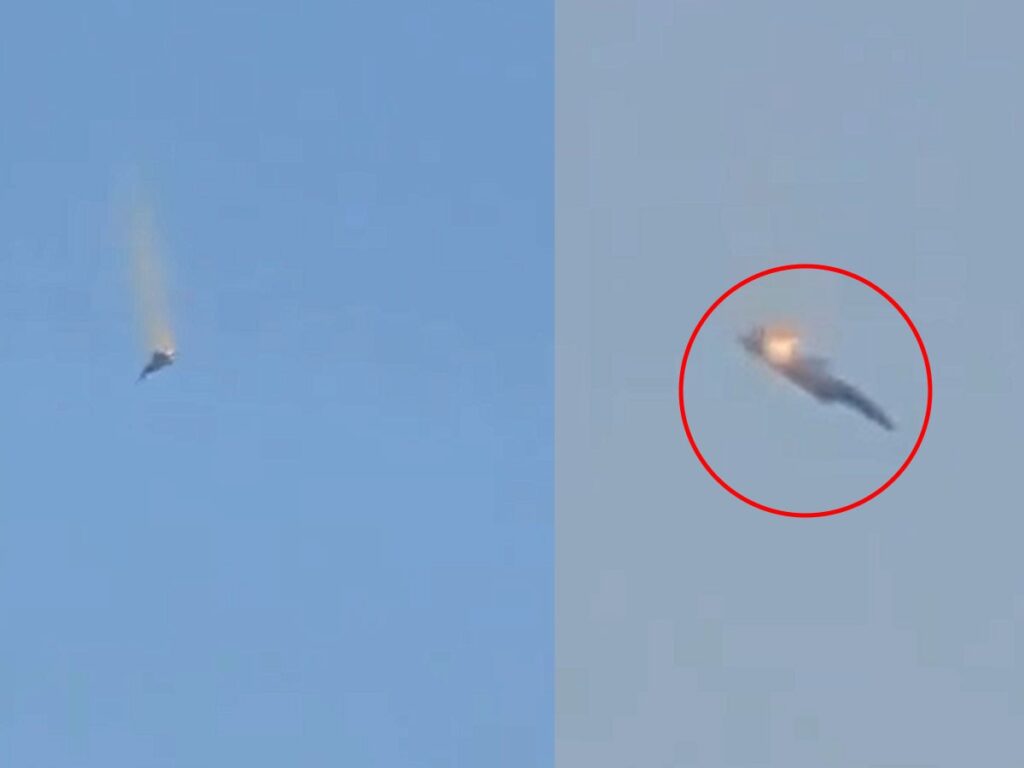
According to open-source investigators, the crash location was confirmed through terrain comparison and visual matching with known geographic features in western Kuwait. The aircraft went down during daylight hours, allowing multiple recordings of the event from different vantage points.
Christiaan Triebert, an investigator with Bellingcat, commented publicly on the footage, writing: “White smoke is visible in the sky, leading to speculation that the F-15 may have been shot down — potentially by friendly fire.”
At the time of publication, no official confirmation has been issued regarding the cause of the crash. Claims circulating online suggesting the aircraft may have been struck by air defense systems remain unverified. Several regional sources have asserted that confusion during a drone attack response may have contributed to the incident, but authorities have not confirmed these accounts.
The United States Air Force has not yet released a formal statement detailing the aircraft’s mission profile, squadron affiliation, or operational status prior to the crash.
The F-15 is a twin-engine tactical fighter designed for air superiority and strike missions. Variants of the aircraft remain widely deployed across the Middle East for air defense, interception, and rapid-response missions. The platform is capable of high-speed maneuvering and carries advanced radar systems intended to detect and engage airborne threats at extended ranges.