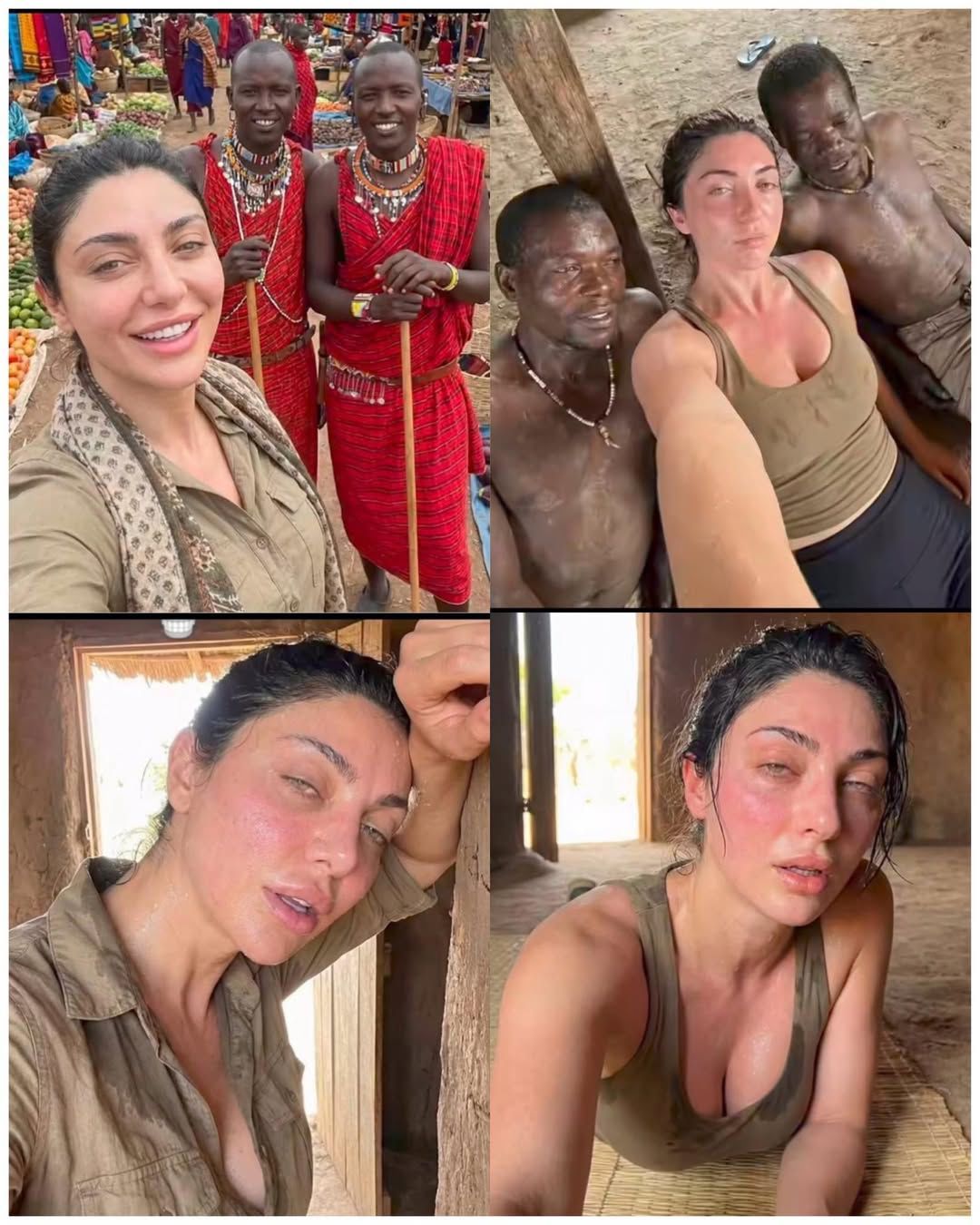
When Maya boarded her flight from New York to Nairobi, she told everyone it was just a vacation. A long-overdue break. A chance to take photos, post sunsets, and return home with stories about safaris and spices. She had no idea that the trip would split her life into two chapters: before Africa, and after.
She landed in Nairobi, the air warm and alive with motion. The city pulsed with energy—motorbikes weaving through traffic, vendors calling out prices, jacaranda blossoms scattered across sidewalks like violet confetti. From there, she traveled south toward the Maasai Mara, camera in hand, expectations high.
The first morning on safari, she watched the sun rise over golden grasslands. A herd of elephants moved slowly across the horizon, calves tucked between towering adults. In that stillness, something inside her shifted. She had seen wildlife documentaries before—narrated by polished voices like David Attenborough—but nothing compared to the quiet power of witnessing it herself. The air smelled of earth and dew. The only sounds were wind and distant calls of birds.
It wasn’t just the animals that changed her. It was the people.
In a small village near the reserve, she met Amina, a local teacher who invited her to visit the school. The building was modest—wooden desks, chalkboard walls, sunlight pouring in through open windows. Yet the room buzzed with curiosity. The children asked Maya about her home, her job, her life. Their questions were direct and fearless.
“What makes you happy?” one girl asked.
Maya hesitated. She had spent years climbing the corporate ladder, measuring success in promotions and paychecks. But standing in that classroom, she realized she didn’t have a simple answer.
Over the next week, she learned more than she expected. She learned that joy could live in small things—shared meals cooked over open fire, stories told under endless skies, laughter that didn’t require Wi-Fi. She visited a conservation center working to protect endangered rhinos. She listened as rangers described the constant battle against poaching, their voices heavy with responsibility yet bright with hope.
One evening, as the sky burned orange, Maya sat with her guide, Daniel, overlooking the plains. He spoke about balance—how communities, wildlife, and land were connected in ways outsiders often overlooked. “You don’t just visit this place,” he said. “It visits you back.”
She didn’t understand what he meant at first.
But on her last day, something happened that made his words clear. While driving through the reserve, their jeep stalled. As Daniel stepped out to check the engine, a lioness appeared in the tall grass—not threatening, just present. She paused, meeting Maya’s gaze for a suspended second that felt eternal. There was no fear. Only awareness.
Maya felt small in the best possible way. Not insignificant—but humbled. The world was vast, intricate, alive beyond her routines and worries.
When she returned home, her apartment felt different. Smaller. Louder. The pace of life she once accepted now seemed relentless. Emails piled up. Meetings resumed. Yet her mind kept drifting back to wide horizons and children’s laughter echoing in dusty classrooms.
Friends noticed the change. She spoke more slowly. She listened more carefully. She no longer rushed to fill silence.
Within months, she made a decision that surprised everyone—including herself. She applied for a sabbatical and began volunteering remotely with the conservation center she had visited. She organized fundraising events, spoke at community gatherings, and shared stories—not filtered for social media perfection, but honest reflections on interconnectedness.
Her trip had begun as tourism. It became transformation.
She learned that Africa was not a single story, not a backdrop for dramatic sunsets or safari selfies. It was complexity—modern cities and ancient traditions, innovation and struggle intertwined. She had tasted Ethiopian coffee brewed with ceremony in a café in Addis Ababa during a layover. She had danced to Afrobeats pulsing through a night market. She had watched conservationists risk their lives to protect ecosystems that serve the entire planet.
Most importantly, she had confronted her own assumptions.
Before the trip, she unconsciously carried narratives shaped by headlines and charity commercials. Afterward, she understood the danger of a single story. She saw strength where she once saw scarcity, agency where she once saw need.
The transformation wasn’t dramatic or loud. It was steady. She began simplifying her life—donating clothes she didn’t wear, cutting back on mindless spending, investing time in local environmental initiatives. The lioness’s gaze stayed with her, a reminder that every choice ripples outward.
Two years later, she returned to Kenya—this time not as a tourist, but as a partner in a collaborative project between her company and local educators. When she stepped again onto the red earth near the Maasai Mara, she felt a sense of homecoming she couldn’t fully explain.
Amina greeted her with the same warm smile. The school had grown—new books, fresh paint, a small computer lab powered by solar panels. The children remembered her. They asked new questions.
“What have you learned since you left?” a boy asked.
Maya smiled.
“I learned that the world is bigger than I thought,” she said. “And that I am part of it in ways I didn’t understand.”
The truth was, Africa hadn’t changed her overnight. It had awakened something already there—a longing for meaning beyond metrics. A respect for land and life. A willingness to live with intention.
Travel, she realized, is not about escape. It is about encounter. When we step into landscapes that dwarf our egos and communities that challenge our narratives, we return altered.
One trip to Africa—and her life was never the same.
Not because of danger or drama.
But because she saw clearly for the first time.
And once you see that clearly, you cannot go back to living blindly.