When parents notice something unusual on their child’s skin, especially a visible mark or rash, it can immediately trigger worry. Skin changes are often the first visible sign that something is happening in the body, and because children cannot always clearly describe discomfort, visual clues become even more important. However, not every rash or circular mark signals something dangerous. In fact, most skin changes in infants and young children are harmless, temporary, and treatable.
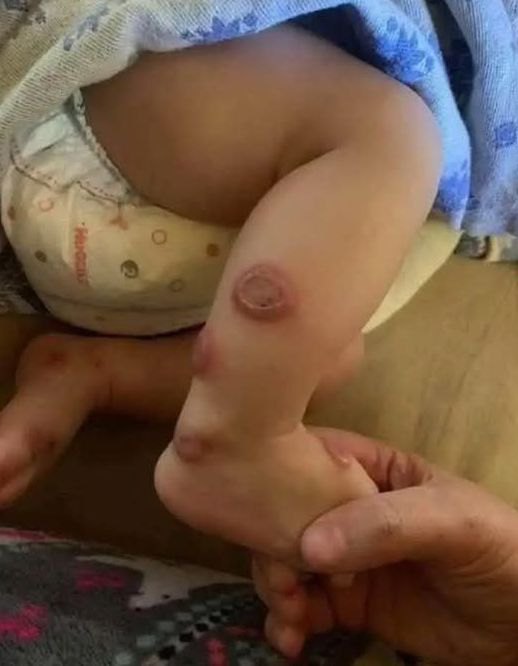
A round, red lesion with a defined border—like the one shown earlier—is most commonly associated with conditions such as fungal infections, mild inflammatory reactions, or benign dermatological issues. One of the most frequent causes is tinea corporis, commonly known as ringworm. Despite its alarming name, ringworm is not caused by a worm. It is a superficial fungal infection that affects the outer layer of skin. It often appears as a circular or ring-shaped patch with a slightly raised edge and clearer center. The border may look redder than the inside of the circle.
Ringworm spreads through direct contact. Children can pick it up from pets, other children, shared towels, or contaminated surfaces. It is common in daycare settings because young children are in close physical contact and may share toys or bedding. The good news is that ringworm is typically mild and responds well to antifungal creams prescribed by a pediatrician. Treatment usually lasts two to four weeks, even if the rash begins improving sooner.
Another possible cause of circular skin marks is eczema, also known as atopic dermatitis. Eczema patches can sometimes form coin-shaped lesions that resemble rings. Unlike ringworm, eczema often causes significant dryness, flaking, and itching. The skin may appear rough rather than smooth. Eczema is not contagious and is related to skin barrier sensitivity and immune response. Moisturizers, gentle skin care routines, and sometimes medicated creams help manage flare-ups.
A less common but harmless condition that can cause ring-like marks is granuloma annulare. This condition produces smooth, firm bumps arranged in a circular pattern. It is not infectious and usually does not itch or hurt. In many children, granuloma annulare resolves on its own over time without treatment.
Parents sometimes worry that circular lesions could signal something more serious, such as skin cancer. However, skin cancer in infants and very young children is extremely rare. Most childhood skin tumors are benign. When doctors evaluate suspicious moles or lesions in older individuals, they often use the ABCDE guideline: asymmetry, border irregularity, color variation, diameter larger than six millimeters, and evolving appearance. Many common childhood rashes do not fit these warning signs.
Insect bites can also create round, inflamed marks that resemble rings. Some bites trigger stronger local reactions in babies because their immune systems are still developing. These reactions may look dramatic but are usually harmless. If the bite becomes warm, increasingly swollen, or produces pus, medical attention is recommended to rule out infection.
Contact dermatitis is another frequent cause of skin changes in infants. Babies have delicate skin that reacts easily to new detergents, soaps, fabrics, or lotions. A reaction might appear as a red patch where the irritant touched the skin. If the irritant is removed, the rash often improves quickly.
When should a parent seek medical care? While most circular rashes are minor, certain warning signs deserve prompt evaluation. These include rapid growth, bleeding, oozing, severe pain, high fever, spreading redness, or signs that the child is generally unwell. If a rash does not improve within one to two weeks or worsens despite gentle care, a pediatric appointment is wise.
It is important to avoid self-diagnosing based solely on internet images. Lighting, camera quality, and skin tone can all alter how a rash appears in a photo. A healthcare provider can examine texture, scaling, temperature, and other features that images cannot capture.
In today’s digital age, alarming headlines often accompany photos of skin conditions. Phrases like “first signs of cancer” or “deadly symptom revealed” are commonly used to attract attention. These posts frequently lack credible medical sources. They may exaggerate rare possibilities while ignoring common explanations. Fear-based messaging spreads quickly because it taps into parental instincts to protect children at all costs.
Responsible health decisions rely on verified medical advice, not viral posts. If you see a concerning claim online, look for confirmation from established medical organizations or consult a licensed healthcare professional. Pediatricians are trained to distinguish between harmless rashes and those that require further testing.
Basic skin care for infants can reduce many common issues. Use mild, fragrance-free cleansers. Avoid overdressing babies in hot weather. Wash new clothes before wearing them. Keep skin moisturized, especially in dry climates. Monitor pets for fungal infections if ringworm is suspected. These simple steps can prevent or minimize many common dermatological problems.
It is also helpful to remember that children’s immune systems are still developing. They respond to irritants and infections differently than adults do. What looks dramatic may resolve quickly with appropriate care.
Ultimately, while a circular lesion can look alarming, the most likely causes in a baby are benign and treatable conditions. The key is observation and timely medical consultation when needed. Avoid panic, gather accurate information, and seek professional evaluation if uncertain.
Health concerns involving children naturally trigger strong emotions. But knowledge, calm assessment, and evidence-based care provide reassurance. Most childhood skin conditions are manageable and temporary. If there is ever doubt, a simple visit to a pediatric clinic can offer clarity and peace of mind.