1. What’s Going On: The U.S. Has Launched Strikes and Is Escalating Military Posture
Recent Military Strikes and Drills
In the last several weeks, the United States has conducted multiple military strikes and deployments across the Middle East and beyond:
-
U.S. forces have carried out retaliatory air strikes in Syria against Islamic State (ISIS) targets following deadly ambushes that killed U.S. personnel. These have involved large-scale precision attacks on dozens of targets and included allied forces such as Jordanian aircraft.
-
In Yemen, U.S. military aircraft and drones have launched “decisive and powerful” strikes against Houthi militant positions, targeting leaders, bases, and missile systems to protect international shipping lanes and U.S. forces in the region.
-
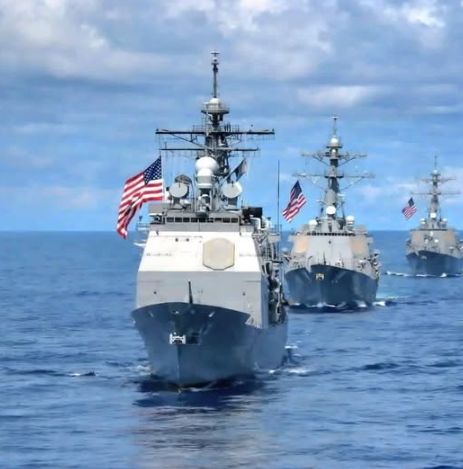
The United States has deployed major military assets — including the aircraft carrier USS Abraham Lincoln and guided-missile destroyers — into the Middle East amid rising tension with Iran.
-
Large-scale U.S. military readiness drills involving multiple services are underway across the Middle East.
These actions — while not formally a “war declaration” — represent a significant escalation in military operations and posture compared with recent years.
2. Why This Matters: Tensions With Iran Are Central
Much of the current escalation centers on rising U.S.–Iran tensions:
-
Iran has warned that any U.S. strike will be treated as a trigger for full-scale war.
-
Iran-linked militias in Iraq and Yemen have threatened renewed attacks as U.S. naval forces arrive in the region.
-
Tehran has publicly dismissed the U.S. carrier arrival but continues to signal defiance, warning of continued resistance.
The backdrop includes years of tensions over Iran’s nuclear program, proxy conflicts in the region, and disputes over commercial shipping security.
3. Has the U.S. Declared War? Not Yet — But the Actions Are Intensifying
Under U.S. law, a formal declaration of war requires a resolution from Congress, which has not happened. What exists right now is a series of military authorizations and active operations:
-
U.S. operations in Syria and against ISIS, for example, have been framed as retaliatory self-defense following attacks on U.S. forces rather than the start of a new declared war.
-
Strikes in Yemen were presented as defensive moves to keep vital shipping lanes open and protect U.S. assets, not as part of a formal state-to-state war.
So while military actions are intensifying — and some could be part of broader strategic aims — they are not currently legal war declarations in the constitutional sense. However, these operations bring the risk of being perceived internationally as war or conflict escalation.
4. Historical Context: U.S. Military Patterns and the Use of Force
The United States has engaged in numerous military engagements without formal war declarations over the past several decades, including:
-
Long-running counter-terrorism operations in the Middle East and Africa.
-
Air strikes against ISIS positions in Iraq and Syria.
-
Air and naval operations against Iranian proxy forces or elements in regional conflicts.
These examples show that the U.S. frequently uses military force without a full war declaration, but the scale and geographic spread of current actions — especially involving major carrier groups and tensions with a nuclear-armed state like Iran — elevate the stakes.
5. Regional Security & Risks of Wider Conflict
Iranian Response and the Threat of Escalation
Iran’s leadership has made clear that strikes on their territory or allies could trigger a broader, intense military response. Whether such threats materialize depends on how confrontations evolve, including:
-
Missile or drone attacks on U.S. bases or ships.
-
Responses by Iran’s allied militias in Iraq, Yemen, or Lebanon.
-
Broader diplomatic and military maneuvers by regional actors like Israel or Saudi Arabia.
Even short of full war, such tit-for-tat military engagements can inadvertently expand the conflict.
International and Regional Actor Reactions
Countries such as the United Arab Emirates have reaffirmed neutrality, declining to allow bases or airspace to be used for strikes against Iran. This indicates a regional concern about escalation.
Meanwhile, non-state groups like Houthis have signaled continued willingness to fight and disrupt maritime traffic as part of wider strategic goals.
6. Potential Escalation Scenarios
Right now, analysts point to several possible paths forward:
A. Diplomatic De-Escalation
If the U.S. and Iran return to negotiations or third-party negotiations (such as through the United Nations or European mediators), tensions could ease. Diplomatic channels often reduce the risk of unintended violence.
B. Proxy Conflicts Widen
Iran might encourage allied militias to increase actions against U.S. forces or partners (e.g., in Iraq, Yemen, or Syria), leading to greater U.S. military responses short of full war.
C. Limited Direct Confrontation
An exchange of missiles or direct strikes between Iranian forces and U.S. assets could occur, potentially prompting each side to escalate militarily — a dangerous but concentrated conflict scenario.
D. Full-Blown Conflict
If a major incident prompts a broad mobilization — such as an attack causing significant casualties — U.S. domestic politics could push toward a declaration of war. This remains unlikely today but is among the risks if hostilities widen significantly.
7. How the U.S. Frames Its Actions
The U.S. government has consistently described these military operations as:
-
Self-defense against attacks on American personnel, assets, or interests.
-
Protection of international trade routes and maritime navigation, especially in the Red Sea.
-
Counter-terrorism actions targeting ISIS and affiliated groups.
Official language often avoids stating that the U.S. and Iran are in a declared war, emphasizing specific targets and legal justifications instead.
8. How the World Sees It
International reactions are mixed:
-
Some allied governments support U.S. strikes against designated terrorist threats.
-
Others warn that direct conflict with Iran risks wider instability.
-
Regional governments are balancing economic interests, security concerns, and the desire to avoid being drawn into conflict.
Even without a formal war, external perceptions of U.S. military escalation are shaping global diplomacy and strategic calculations.
9. Domestic U.S. Political Dynamics
Within the United States:
-
Congressional leaders on both sides of the aisle have expressed concern over the legal authority for ongoing military operations, calling for clarity on authorizations.
-
Some lawmakers argue that continued military engagement without a war declaration undermines constitutional war powers.
These debates will influence how — and how far — future actions proceed.
10. Summary: Is the U.S. at War? Not Yet — But the Situation Could Evolve Quickly
Key points:
 The United States has launched significant military strikes and operations in the Middle East. These are presented as defensive and targeted rather than part of a formally declared war. Tensions with Iran are increasing, with both sides issuing warnings that risk escalation. Regional militias and allied forces have the potential to widen the conflict. Domestic and international pressure could shape whether this remains a limited engagement or escalates.
Conclusion: A Perilous Moment With Global Stakes
While the U.S. has not formally declared war, military operations are ongoing, tensions with major state actors are high, and the potential for unplanned escalation is significant. What looks today like targeted military action and positioning could, in a volatile region, broaden into an open conflict involving multiple countries and theaters.