What Just Happened: U.S. Forces Remove Maduro from Power
In a dramatic escalation of tensions in the Americas, U.S. military forces carried out a large-scale operation in Venezuela early in January 2026 resulting in the capture and removal of Venezuelan President Nicolás Maduro and his wife, Cilia Flores. According to statements from U.S. President Donald Trump, the operation involved military strikes around Caracas, after which Maduro was seized and flown to the United States.
This extraordinary intervention marks the first time in recent history that U.S. forces have directly arrested and taken a sitting head of state into custody abroad. Maduro is now in federal custody in New York and has been charged by U.S. prosecutors with drug trafficking and narco-terrorism offenses.
In an unprecedented move, the U.S. government also announced plans to temporarily administer Venezuela’s government and its vast oil resources to facilitate what it calls a transition to stability and rule of law.
Maduro’s First Comments from U.S. Custody
Upon his first appearance in a U.S. federal courtroom, Maduro pleaded not guilty to the drug trafficking and narco-terrorism charges. He denounced his capture, calling it a “kidnapping” and insisted he remains the legitimate president of Venezuela.
His defense is expected to focus on claims of sovereign immunity and illegality of the U.S. action — a notable constitutional and international law debate that harks back to historic cases like that of Panama’s Manuel Noriega.
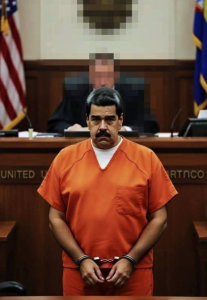
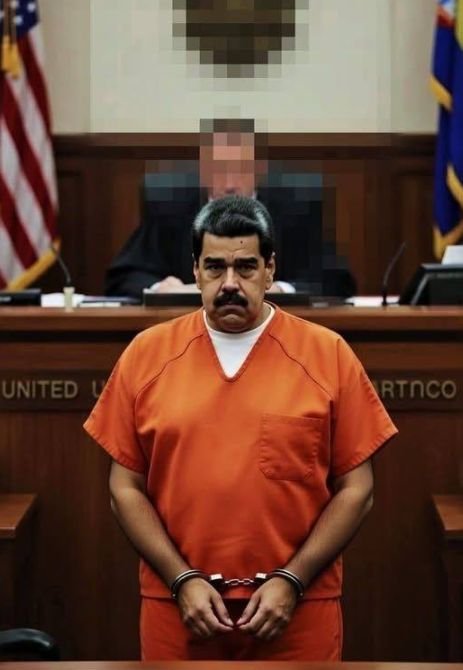
Maduro’s dramatic courtroom appearance — in U.S. jail attire — symbolized just how much the geopolitical landscape has shifted. Once the entrenched strongman leader of Venezuela for nearly 13 years, he now finds himself facing a drawn-out legal battle in a foreign courtroom.
Domestic Power Struggle in Venezuela
With Maduro removed, Delcy Rodríguez, a longtime Maduro ally and former vice president, has declared herself acting president in Caracas. She has vowed to continue releasing political prisoners detained under Maduro’s rule and speaks of a “new political moment” for Venezuela.
However, this power shift is far from settled. Many Venezuelans — especially opponents of the Maduro regime — are skeptical of Rodríguez’s legitimacy. Independent estimates suggest hundreds if not thousands of political detainees remain incarcerated, and there are ongoing reports of militia and security force operations that continue to create an atmosphere of fear and unrest.
This uncertainty highlights a deep political fragmentation: while the U.S. and some Venezuelan opposition figures see Rodríguez as a transitional leader, others argue she represents continuity of the old regime’s corruption and repression.
International Law, Reactions, and Global Politics
The U.S. operation has sparked intense international debate:
Criticism
-
Russia’s foreign minister Sergei Lavrov condemned the U.S. action as undermining the international order and violating sovereignty, warning it could erode global norms against unilateral interventions.
-
Legal analysts and human rights advocates have argued that removing a head of state through military means violates international law, potentially setting a dangerous precedent.
Support
-
Some Western leaders have cautiously welcomed Maduro’s removal, calling his authoritarian rule undemocratic and responsible for economic collapse and human rights abuses — though many also express concern about how the U.S. conducted the operation.
Neutral or Mixed Reactions
-
Countries like France and the U.K. have indicated support for Venezuela’s transition away from authoritarianism, while emphasizing the need for international legal norms and diplomacy.
The fallout has also increased diplomatic activity, including a recent positive phone call between President Trump and Delcy Rodríguez focusing on oil, security, and trade — a surprising diplomatic thaw after weeks of hostility.
Regional Impact and Security Concerns
The capture of Maduro has not brought calm. The U.S. State Department issued warnings urging American citizens to avoid travel to Venezuela amid reports that paramilitary “colectivos” are targeting U.S. or Western nationals.
Oil markets and energy geopolitics are also in flux. Venezuela possesses among the largest proven oil reserves in the world. The U.S. goal of “running Venezuela” has economic as well as political motivations, particularly regarding oil production and investment.
Meanwhile, oil tankers linked to Venezuela have been seized in the Caribbean under new U.S. sanctions enforcement, signaling that economic pressure remains part of the broader strategy toward Caracas.
Human Rights and Economy: Long Legacies
Long before this crisis peaked, Maduro’s government faced allegations of widespread human rights abuses, repression of political opponents, and economic collapse. Thousands of Venezuelans fled the country in recent years, with hyperinflation, shortages, and mass migration defining Venezuelan life in the late 2010s and 2020s.
Under Maduro’s rule, civil liberties — including freedom of expression and access to social media platforms — were heavily restricted. Venezuela had even blocked access to major platforms like X (formerly Twitter) in an effort to control information flows.
The Cartel of the Suns, a group allegedly linked to Venezuelan military officials and the Maduro regime, was designated by the U.S. as a terrorist organization — one of the legal bases cited by U.S. authorities for the intervention.
What Happens Next? Key Uncertainties
-
Maduro’s Trial and Legal Implications:
Maduro’s case in New York could become a landmark legal battle over sovereign immunity, international law, and the reach of U.S. jurisdiction. -
Who Will Lead Venezuela?
The legitimacy of Delcy Rodríguez’s presidency remains contested internally and externally. Opposition leaders like María Corina Machado — whom some Venezuelans view as a rightful leader — have argued for a transition to democratic governance. -
Regional Stability:
With paramilitary groups active and millions of Venezuelans displaced over years, political stability is far from guaranteed. -
International Order:
The operation may reshape norms about external interventions, sovereignty, and how the global community responds to alleged criminal leadership within nations.
Final Takeaway
The removal of Nicolás Maduro from power by U.S. forces signals one of the most dramatic geopolitical shifts in recent Latin American history. It is as much a legal and diplomatic earthquake as it is a military event — challenging international norms, provoking global debate, and reshaping Venezuela’s future. How this moment translates into lasting peace, democratic governance, and economic revival for Venezuela remains the central question of the moment.