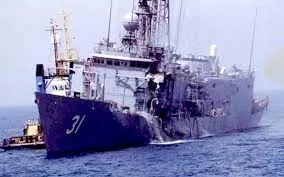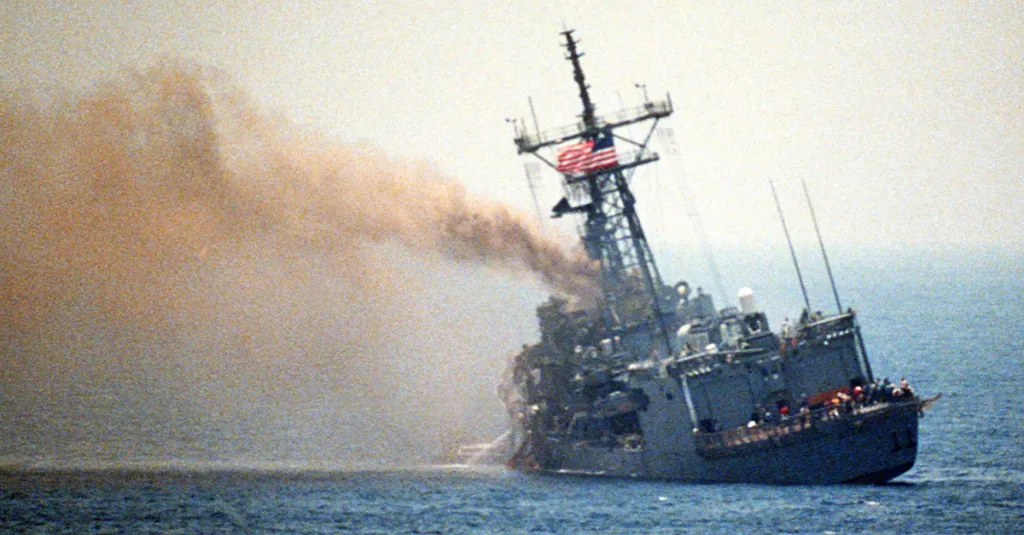
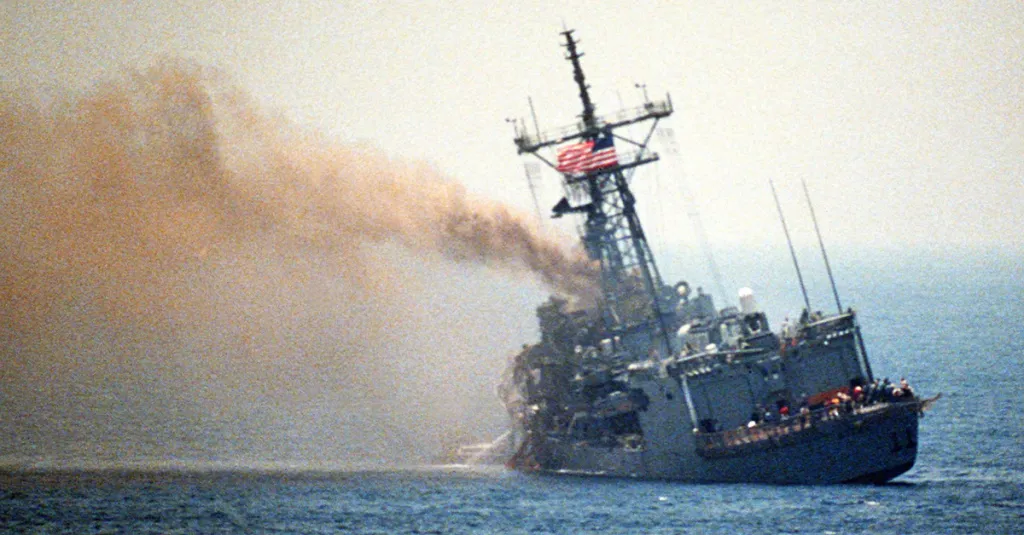
On May 17, 1987, a long-range luxury business jet approached the USS Stark, which was on a routine patrol in the Persian Gulf. The Iran-Iraq War was nearing its end, but attacks from both sides were still brutal and frequent. When Stark requested the plane identify itself, it instead fired two Exocet anti-ship missiles, killing 37 sailors and wounding another 21.
The Stark was well outside the war zone and wasn’t expecting to run into any kind of attack, especially from Iraq, which was a de facto ally of the U.S. The crew of the Stark saw what they believed was an Iraqi Mirage fighter coming their way, and, as such, was no real cause for alarm. But the F-1 Mirage wasn’t a fighter at all — it was a classified, modified business-class plane, specially adapted to raid Iranian targets.
The Americans never saw it coming.
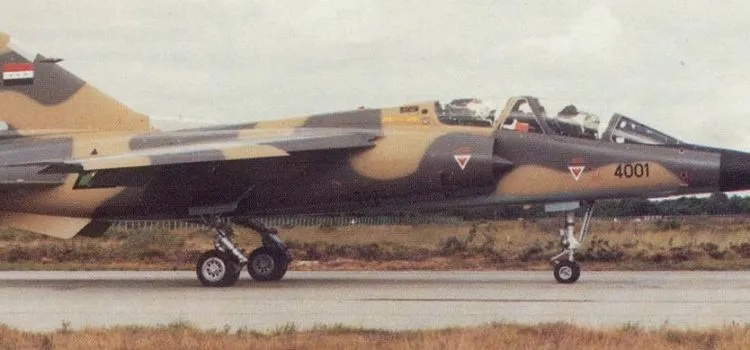
The ship’s electronic surveillance systems didn’t see the missiles and neither did the radar, despite both systems being able to track the business jet. The jet made a few quick turns, coming closer with each turn. When it was 30 miles out, it fired and sped away. The second missile hit Stark 30 seconds after the first. The crew had no time to respond.
According to the Navy’s official investigation of the incident, Stark’s crew and officers believed the plane would “benignly pass them by.” The Tactical Action Officer took no action, even though he knew the Mirage fighter they believed the plane to be was capable of firing missiles from 38 miles away. The TAO tried to increase the ships readiness level in the minutes before the first missile hit, but by then it was too late.
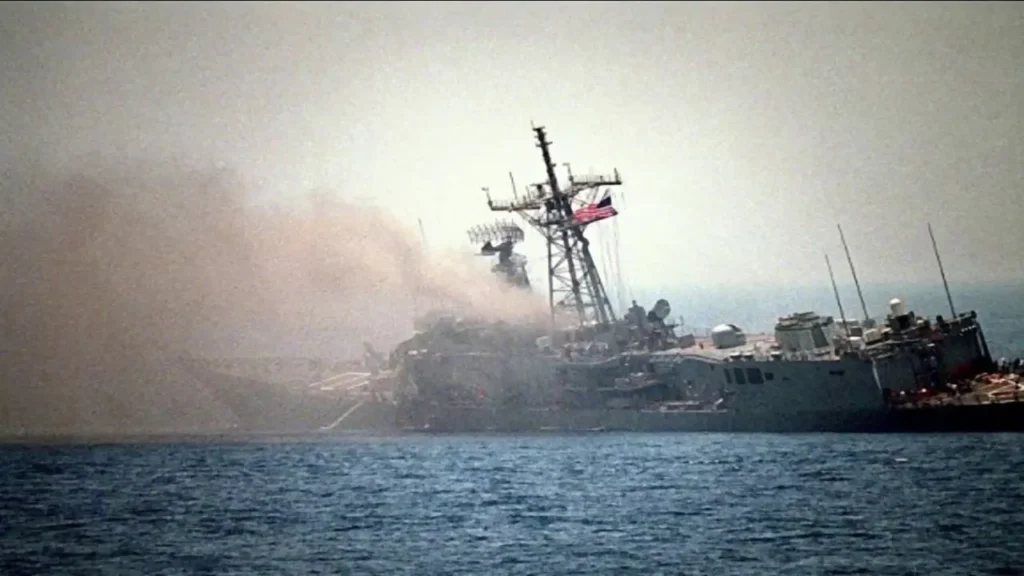
There was plenty of blame to go around. The Weapons Control Officer was not at his station, the Fire Control Technician had already left the operations room on personal business, the automatic detector-tracker was off, the fire control radar was on standby, and the Mk-92 fire control radar was not locked onto the attacker until the missiles were already on their way.
The first Exocet penetrated the hull but did not explode, hitting right beneath the bridge. Its unspent fuel sparked a huge fire aboard the ship. The second missile hit the same spot, but this one exploded, blowing a 3×4.6-meter hole in the ship’s hull. Of the 37 sailors who died, 29 were killed immediately, two were lost at sea, and eight more died of their wounds.
Strangely enough, it was an Iranian helicopter and a Saudi Arabian ship that assisted the Navy in rescue and salvage operations.
Stark was still afloat and managed to hobble back to port in nearby Bahrain with the help of destroyers USS Waddell and USS Conyngham, along with the destroyer tender USS Acadia. Captain Glenn Brindel was relieved of command of the Stark, eventually taking non-judicial punishment and retiring early.
Iraq initially claimed the ship violated the war-zone area, but upon seeing the Navy’s evidence to the contrary, relented. They announced they would pursue their own inquiry into the incident and apologized to the United States after President Reagan called an emergency meeting of the National Security Planning Group.
“If this attack was carried out by Iraqi planes, then it ‘would have been the result of confusion by the pilots’,” the Iraqi Foreign Minister told the Guardian. It’s not known what became of the pilot but the Iraqi investigation found he thought the Stark was an Iranian tanker.