 Executive Summary — What Happened
In a dramatic escalation of tensions tied to the ongoing conflict involving Iran, Israel, and the United States, Iran’s parliament (the Majlis) has voted to approve a proposal to close the strategic Strait of Hormuz, a narrow passage that serves as a vital conduit for global oil and gas shipments.
However, this parliamentary vote is not the final legal step. The decision now moves to Iran’s Supreme National Security Council (SNSC), the country’s highest internal security authority, which has the ultimate power to enforce such a closure.
The move appears to be a response to recent US military strikes on Iranian nuclear facilities, which Tehran has denounced as aggressive and unjustified.
 Why the Strait of Hormuz Matters
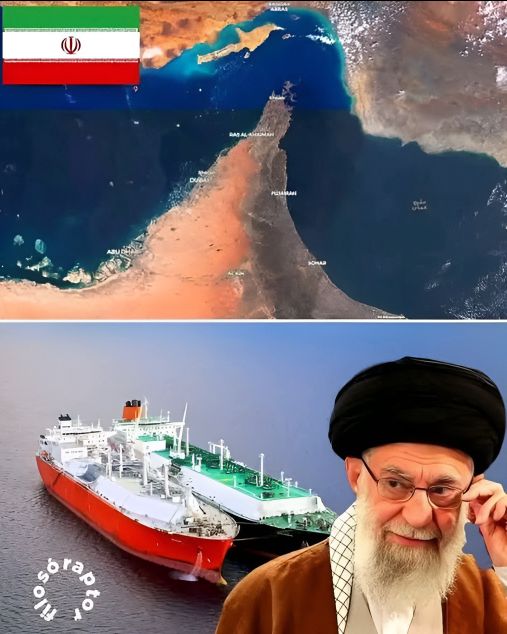
The Strait of Hormuz is one of the most geo-strategically significant maritime chokepoints in the world:
-
It links the Persian Gulf with the Gulf of Oman and Arabian Sea.
-
Approximately 20% of the world’s oil and gas supplies flow through this narrow channel daily.
-
At its narrowest, the strait is only about 33 km (20 miles) wide, with even narrower shipping lanes — making it sensitive and easily disrupted.
-
Major exporters from Saudi Arabia, Iraq, the UAE, Qatar, and Iran rely on this route for energy exports.
Because of this, any real closure — even temporary or partial — would immediately affect global energy markets, shipping, and economies worldwide.
 What the Parliament Vote Actually Means
 Symbolic/Political Statement
Iran’s parliament approved a measure urging the closure of the Strait of Hormuz as a strong political message against foreign military actions — particularly by the U.S. — and to signal Iran’s readiness to defend its interests.
-
The vote demonstrates Tehran’s internal political unity on resisting outside military pressure.
-
The resolution reflects heightened tensions following US strikes on Iranian nuclear sites, regarded by Tehran as unacceptable aggression.
 Not Yet a Legal Closure
Importantly:
-
Parliament’s vote alone does not legally close the strait.
-
The authority to enforce the closure — including any military or strategic implementation — lies with the Supreme National Security Council (SNSC) and, ultimately, Iran’s Supreme Leader.
This distinction matters because a symbolic parliamentary resolution can significantly shape political rhetoric and market reactions without immediately altering on-the-ground realities of global oil traffic.
 Iran’s Justification and Rhetoric
Iranian officials frame the vote within a broader narrative of self-defense and sovereignty:
-
Tehran argues its nuclear facilities were unlawfully targeted, motivating strong parliamentary pushback.
-
The vote is depicted domestically as asserting Iran’s right to protect its sovereignty and strategic interests.
-
Iran’s government often cites the importance of the strait as a leverage point against sanctions and military pressure.
This rhetoric resonates with elements of Iranian political discourse that resist foreign intervention and emphasize regional independence.
 Global Strategic and Economic Implications
If the closure were ever implemented, the impact could be profound.
 Energy Markets
-
The strait handles energy flows that represent nearly one-fifth of world oil and gas demand.
-
Even rumors of closure typically trigger sharp oil price spikes, increased volatility, and risk premiums in energy markets.
-
Long-term disruptions could prompt nations to accelerate alternative supply routes or energy source diversification.
 Shipping and Trade
-
Tankers and cargo ships would need to reroute around longer, more expensive paths — such as around the Cape of Good Hope — increasing delivery times and costs.
-
Insurance premiums for shipping in the broader Middle East would likely rise.
 Military and Diplomatic Escalation
-
A real attempt to block the strait could provoke military responses from the United States, the United Kingdom, or regional partners aiming to keep trade flowing.
-
Allies like European nations, China, and India — heavily reliant on Mideast energy — could be caught diplomatically between economic interests and geopolitical commitments.
 International Relations
-
A unilateral closure would test alliances and could shift geopolitical balances. China and India may push for de-escalation given their energy ties.
-
Western powers would likely condemn the move as destabilizing, while some regional actors might view it as strategic leverage against sanctions and military pressure.
 Likelihood and Constraints
Experts generally consider a full physical closure of Hormuz unlikely for several reasons:
1. Self-Harm
Iran itself depends on the strait for much of its own energy exports. Blocking it would be economically self-defeating unless Tehran has alternative plans or support.
2. Military Risk
An enforced closure would invite direct military responses from world powers whose navies routinely patrol the region to secure energy routes.
3. International Pushback
Even allied states that oppose U.S. military action — including China — may not support or sustain an actual blockade that disrupts global markets.
Nevertheless, Iran’s political leadership views the option as a strategic “trump card” and a signalling tool, not necessarily an imminent battlefield decision.
 Related Actions by Iran’s Parliament
This vote comes amid broader legislative moves in Tehran aimed at asserting autonomy:
-
Parliament recently approved a bill to suspend cooperation with the International Atomic Energy Agency (IAEA) unless certain security conditions are met, indicating rising mistrust with international nuclear watchdogs.
-
Other controversial measures include restrictions on foreign satellite internet services and harsher penalties for cooperation with perceived hostile nations.
These actions highlight a pattern: Tehran is increasingly legislating responses to external pressure in ways that heighten tensions with Western powers.
Final Takeaway
The parliamentary approval to close the Strait of Hormuz is a major geopolitical signal, not an immediate change to global oil flows.
-
It reflects escalating tensions between Iran and the United States after recent military strikes.
-
The vote boosts Iran’s negotiating leverage and domestic unity on resisting foreign pressure.
-
But actual closure requires approval by Iran’s Supreme National Security Council and real implementation would be enormously disruptive.
In short, the vote deepens geopolitical risk but is so far not an executed closure of the strait.